Rehoboth Place is a peaceful and serene tranquility nestled up in the lush green pastures and morning dew of Agbarha-Otor. It is home to the resting site of the late Olorogun (Senator) Felix Ovuodoroye Ibru, who was called to glory on March 12, 2016. The grounds and garden form a welcoming space for our reflection, remembrance and gratitude to God for His goodness in the life of this blessed son of Urhobo land.
The Life of Olorogun (Senator) Felix Ovuodoroye Ibru
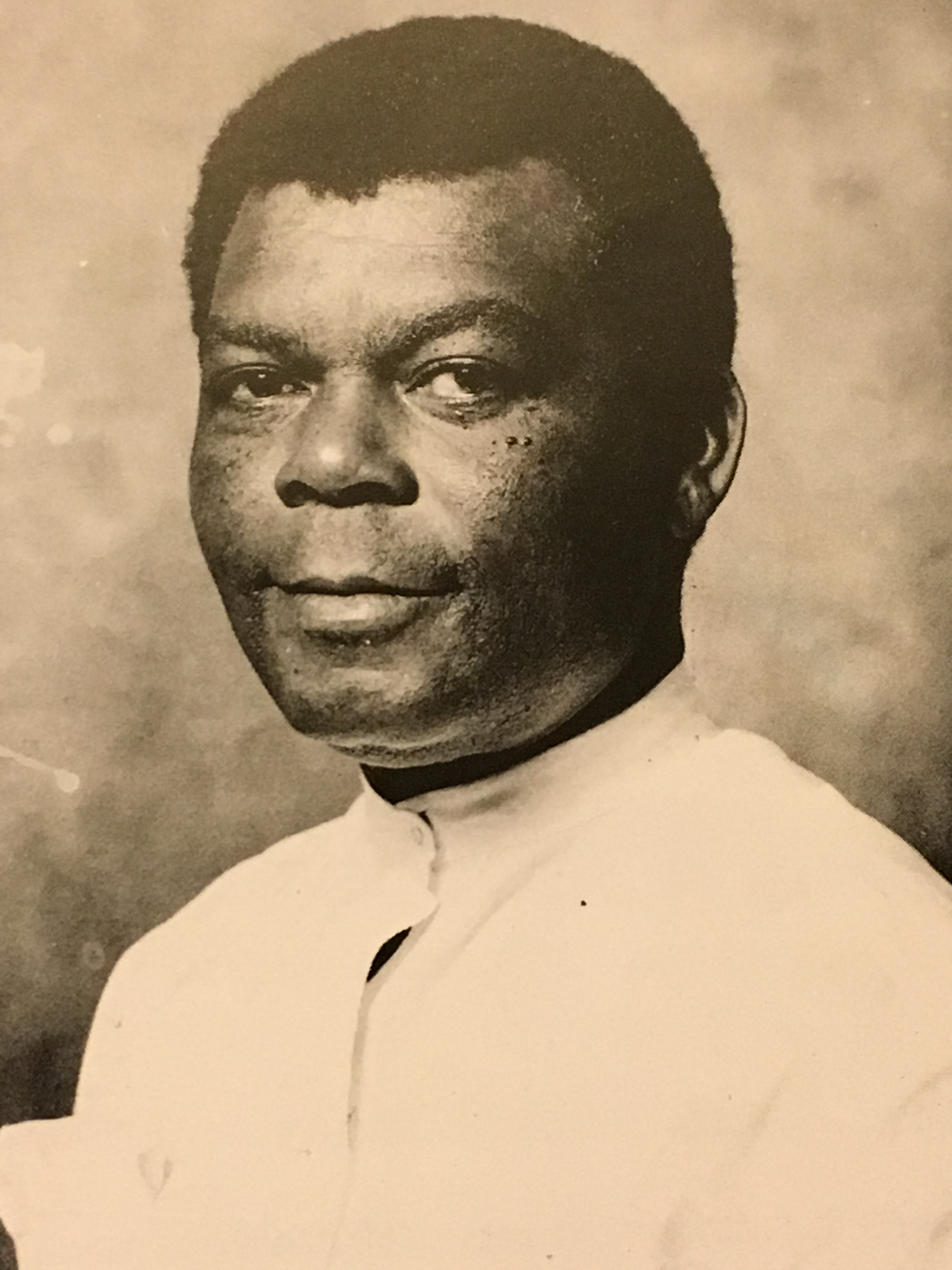
Early life at Igbobi, United Kingdom and Technion, Israel
Born on December 7, 1935 at Agbarha-Otor in the Ughelli North Local Government Area of Delta State to Chief Epete Ibru and Chief (Mrs.) Janet Omotogor Ibru, Olorogun Felix was the second of seven children. He was educated at Yaba Methodist School, and later Igbobi College, where he became Head Boy in 1955. He later won the Elder Dempster Lines Scholarship to travel to the United Kingdom. After Igbobi College, young Felix proceeded to Nottingham School of Architecture in England where he qualified as an architect in 1962.
While a student in Nottingham, he had the singular honour of being elected the first black President of the British Council with responsibility for Nottinghamshire, Derbyshire, Lincolnshire and Leicestershire. In that capacity, he was presented to Her Royal Majesty Queen Elizabeth II and His Royal Highness Prince Philip, the Duke of Edinburgh at a ceremony of Buckingham Palace in 1960. Shortly after his qualification as an architect in 1962, he worked briefly with the Jewish Agency SOCHNUT, on various projects relating to farm settlements (kibbutzim and moshavim) and prefabricated buildings in Jerusalem and Haifa. He was later to enrol at the Technion Israel Institute of Technology for post-graduate studies and qualified with High Distinction in MSc (Arch) in 1963. He returned to Nigeria at the end of that year and took up an appointment with the Federal Ministry of Education as the first residential lecturer in Architecture at the Yaba College of Technology.
The Architect
Later, he established a flourishing architectural firm, Roye Ibru Associates, which in 1971, went into partnership with Alan Vaughan-Richards and Associates to establish the firm of Ibru Vaughan-Richards and Associates (Planning Partnership). As one of the two Principal Partners of the firm, Chief Ibru was involved in the design and supervision of more than 40 projects across the country. They include: University of Lagos Sports Centre, Oguta Lake Resort, The Diette-Spiff Civic Centre Port Harcourt, Office Extension Elf Nig Ltd Victoria Island, Lagos University Master Plan, New Layout Market Port Harcourt, Mile 3 Diobu Market Port Harcourt, Sheraton Lagos Hotel & Towers Ikeja, University of Benin Sports Centre, University of Benin Master Plan, Faculty of Science Buildings Universities of Benin and of Ogun State, Ogun State Polytechnic Master Plan. In his capacity as Consultant to Ibru Prefabs Limited he was responsible for the design and supervision of several Geodesic Domes of various dimensions in many parts of the country. He was elected member of the Nigeria Institute of Architects (NIA) in 1969, registered by the Architects Registration Council of Nigeria in (ARCON), and elected Fellow of the Nigeria Institute of Architects in 1995. In 1997 he was awarded an honorary degree of Doctor of Laws (LL.D) by the Delta State University and a Fellowship of the Nigerian Institute of Public Relations (NIPR).
First Executive Governor and Senator, the call to serve
When asked in an interview in 1991 by the Guardian Newspaper, why he wanted to abandon the security and privileges of the renowned Ibru business empire for the murky waters of Nigerian politics, Olorogun promptly answered that he was responding to a call to serve. In that interview he also noted that his political activities in earnest began in 1983 when he contested for a seat in the Senate; a forum which he considered the most appropriate platform for Nation building. It was obvious that his foray into politics was driven by a passionate desire to participate in Nation building and he knew that he was taking a calculated risk. For instance, when de decided to run for the governorship of Delta State in 1991, he was aware that the odds were stacked high against him. But he went ahead to contest that election and emerged as the first Executive Governor of the newly created Delta State in 1992.
In spite of the risk factor, it is on record that he has so far lost only in his bid for the Senate in 1983, but won the Constituent Assembly election in 1988, swept the polls in the gubernatorial elections of 1991 and having won the 2003 Senatorial elections, he became Senator of the Federal Republic of Nigeria. It would seem that Olorogun’s sojourn and education abroad, his travels, professional and business activities and his life-style, were to prepare him for the challenges of political and community leadership in Nigeria. He was acknowledged as one of the few Nigerians who have genuinely conquered the primordial barriers of ethnicity. A statesman and a patriot in the mould of the founding fathers of this nation, Felix Ibru’s views on national development reflected a commitment to see Nigeria enter fullness of potential. It appeared that his faith in Integrated Rural Development was a result of the experience he acquired in Israel.
The entrepreneurial spirit and social impact
The wealth creator and his quest to empower this people, a member of one of most prominent business families in Africa, Olorogun Felix Ibru is a consummate businessman whose ideas and advice on business were highly sought after. Thus in 1971, under the auspices of the United Nations (UN), he was invited to Tokyo, Japan as a member of a panel on foreign investment. In 1974, he delivered a lecture at the Harvard Business School in the United States of America on Multi-nationals: Emerging Role of the African Entrepreneur in the Economy and its relationship with Multi-national Corporations: Competition, Partnership, Co-operation and Absorption. Against the background of that lecture, it was obvious that as far back as 1974 he fully understood the need for the multinationals to partner with local entrepreneurs for effective community development. Those who were close to Olorogun knew that the crisis of poverty and under-development that had afflicted the oil-producing Niger Delta for years was like a bleeding sore to his heart. He believed that this region should be flowing with milk and honey, and should be the envy of all.
In discussions, Olorogun liked to talk about his experience in Brass in Rivers State in the early 1970s. Flying in an amphibious aircraft to Brass on a business trip, he had hoped to have a meal of dry fish and pounded yam for lunch. But to his disbelief, there was no dry fish in Brass, a community which was supposed to be synonymous with fish. Leaders of the community later explained that there were no fishermen around because the youth had migrated to the urban areas in search of work, particularly with the oil companies. He was concerned that the trend had not changed in spite of the fact that the oil companies no longer had enough jobs to go round all employment seekers.
In an Urhobo Historical Society lecture on the life of the legendary Urhobo merchant and politician Chief Mukoro Mowoe, Professor G.G. Darah said: “The Ibru Organization with 25 companies was once the most gigantic business conglomerate in Africa, with lucrative tentacles spread across land, sea and air enterprises. The Ibru legacy derived impetus from the accomplishments of pioneer merchant tycoons such as Chief Mukoro Mowoe whose fame dominated the western Niger Delta in the first half of the 20th century. The superlative performance of the Ibru Group has inspired more Urhobo men and women of enterprise to create brave new worlds in all theatres of investment and philanthropy”.
It is widely acknowledged that during his tenure as Governor, Senator Ibru recaptured sweet memories of the outstanding record of patriotism and good governance of Mukoro Mowoe (1890-1948), member for Warri Province in the Western Region House of Assembly. He was passionate about the need to support the poor and the less privileged. He held the title of Olorogun, and was later to become the President General of the Urhobo Progress Union, the socio-cultural umbrella organization of the Urhobo people.
A passionate golfer for many years, he enjoyed a good game across of all levels. He was a devoted family man, and had a deep conviction about the foundational place of family as a pillar for unity and stability in society. He was tirelessly dedicated to his children, grandchildren and his wives.
 Rehoboth Place